

Last Sunday, you spent £15 on premium organic ingredients only to watch your keto cake crumble into a pile of dry disappointment. It's a common struggle for anyone ditching eggs, but the solution is hidden in a single, tiny seed. This guide shows you how to master a reliable flax egg recipe that acts as the perfect structural anchor for your plant-based and low-carb creations.
You already know that traditional gluten-free and vegan bakes often lack the lift and chew of standard recipes. We're here to change that by turning a simple cupboard staple into a powerful, nutrient-dense binder. You'll gain the confidence to swap out eggs 1:1 while adding 2.8 grams of gut-supporting fibre to every serving of your favourite treats.
We'll explore why golden flaxseeds are often the superior choice for lighter sponges and how to avoid the common pitfalls that lead to weak substitutes. No fillers. No confusion. Just functional, plant-based nutrition. At Dillon Organic, we believe in real food that supports your lifestyle. Let's dive into the simple science of creating a bake that truly loves you back.
Key Takeaways
- Master the simple art of creating a nutrient-dense, plant-based binder that brings structure and healthy fats to your favourite recipes.
- Learn the golden ratio for the perfect flax egg recipe and why water temperature is the secret to achieving that ideal gelatinous texture.
- Discover the nutritional power of flaxseeds, including how alpha-linolenic acid (ALA) may support your heart health and overall vitality.
- Identify common baking mistakes and understand the structural limits of plant-based substitutes to ensure your gluten-free treats never fall flat.
- Explore how we embrace the flaxseed revolution at Dillon Organic to craft wholesome, keto-friendly bread that loves you back.
What is a Flax Egg and Why is it a Baker's Secret Weapon?
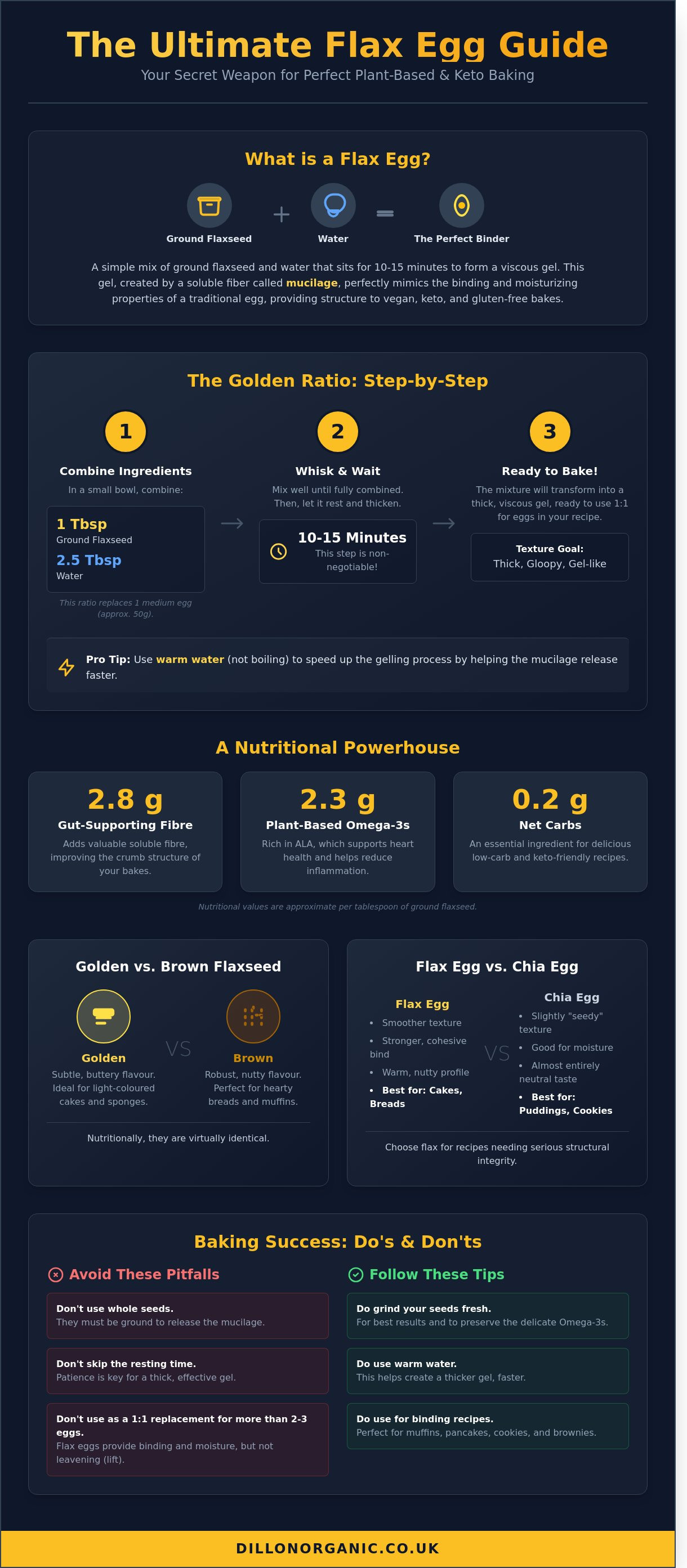
A flax egg is a simple, two-ingredient wonder that has transformed modern plant-based baking. You create it by mixing one tablespoon of ground flaxseeds with three tablespoons of water. After a ten-minute rest, this mixture transforms into a thick, viscous gel that mimics the binding properties of a traditional hen's egg. It's a foundational skill for anyone exploring a flax egg recipe; providing the structure and moisture needed for successful cakes, muffins, and pancakes without the need for animal products.
The magic behind this transformation is a substance called mucilage. This is a type of soluble fibre found in the outer hull of the Flaxseed. When the ground seeds meet liquid, they release these gummy polysaccharides, creating a sticky matrix. A 2019 study published in the Journal of Food Science and Technology confirmed that this mucilage significantly improves the crumb structure and volume of gluten-free breads. It acts as nature's own glue. No chemicals; no synthetic gums; just pure, functional nutrition.
This binder is the go-to choice for vegan, keto, and gluten-free enthusiasts for several reasons. It's incredibly low in carbohydrates, containing just 0.2 grams of net carbs per tablespoon. This makes it a staple for the 15% of UK households that Mintel reported were following meat-free or reduced-carb diets in 2023. It provides the essential "lift" in bakes while keeping the glycaemic load low. It's a versatile tool that bridges the gap between dietary restrictions and the joy of a well-baked loaf.
At Dillon Organic, we believe in bread that loves you back. We spent 18 months of rigorous research and development to perfect our keto sourdough, ensuring every slice is nutrient-dense and kind to your gut. We understand that the best food comes from simple, honest origins. Our philosophy is built on transparency. No nasties. No hidden sugars. Just real food that fuels your lifestyle. Mastering a basic flax egg recipe is your first step into this world of conscious, delicious baking.
Golden vs. Brown Flaxseeds: Does it Matter?
You'll find two main varieties on the shelf: golden and brown. Golden flaxseeds offer a buttery, subtle flavour that disappears into your bake. Brown flaxseeds are more robust with a distinct, earthy nuttiness. If you're whisking up a light-coloured lemon sponge, go for golden to keep the aesthetic clean. For a hearty rye-style loaf, brown seeds add a lovely depth. Nutritionally, they are nearly identical. Both varieties deliver approximately 2.3 grams of plant-based Omega-3 fatty acids per tablespoon, supporting heart health and reducing inflammation.
Flax Egg vs. Chia Egg: A Quick Comparison
While both are excellent binders, they offer different results. Flax eggs produce a smoother, more uniform texture that's ideal for delicate sponges and brownies. Chia eggs tend to stay slightly "seedy," which can add an unwanted crunch to soft bakes. Flax has a warm, nutty profile, whereas chia is almost entirely neutral. Choose flax when you need a stronger, more cohesive bind in gluten-free recipes; choose chia for puddings or thick cookies where texture is less of a concern. Flax is often the more reliable choice for structural integrity in complex bakes.
The Perfect Flax Egg Recipe: Step-by-Step Instructions
Creating a reliable flax egg recipe is about more than just mixing seeds with water. It is a simple piece of kitchen chemistry that replaces the binding power of a standard UK medium egg, which typically weighs around 50g. To achieve this, you need the golden ratio: 1 tablespoon of ground flaxseed to 2.5 tablespoons of water. This precise 1:2.5 balance ensures your vegan bakes have enough structure without becoming overly dense or damp.
Temperature plays a vital role in how quickly your binder develops. While room temperature water works, using warm water is a professional trick that speeds up the release of mucilage. This is the viscous, gel-like substance found in the flax seed coat. Warmth encourages the flax to hydrate faster, creating a thick consistency that mimics an egg white in minutes. Avoid boiling water, as this can sometimes alter the delicate fats within the seeds.
Patience is your most important ingredient. You must allow the mixture to rest for 10 to 15 minutes. This rest period is non-negotiable for a perfect set. During these 15 minutes, the soluble fibre in the flax absorbs the liquid and transforms into a heavy, gloopy binder. If you rush this process, your cake or bread may lack the necessary "glue" to hold it together, resulting in a crumbly texture. Scaling the recipe is straightforward for larger batches:
- For 2 eggs: 2 tbsp ground flax + 5 tbsp water.
- For 3 eggs: 3 tbsp ground flax + 7.5 tbsp water.
- For 4 eggs: 4 tbsp ground flax + 10 tbsp water.
If you are looking for ways to simplify your plant-based kitchen, discover how Dillon Organic can support your wellness journey with our range of nutrient-dense, seed-based breads that take the guesswork out of healthy eating.
Grinding Your Own Seeds for Maximum Freshness
Whole flaxseeds will not work for this recipe. Their tough outer hulls act as a protective barrier, preventing the water from reaching the mucilage inside. To get the best results, use a high-speed blender or a dedicated coffee grinder to turn whole seeds into a fine, sandy meal. Freshly ground flax is superior because the delicate omega-3 oils begin to oxidise the moment the shell is broken. Store any leftover ground meal in an airtight container in the fridge for no more than 7 days to keep it fresh and free from bitterness.
Mixing Techniques for a Smooth Binder
Don't just stir the mixture with a spoon. Use a small whisk or a fork to beat the water into the flax meal vigorously. This ensures every single seed particle is hydrated and prevents dry clumps from forming at the bottom of your bowl. You are looking for a "goopy" consistency that slides off the spoon in a single, thick stream. The 'bloom' of the flax meal refers to the specific moment it reaches its maximum thickness, which occurs exactly 15 minutes after mixing. This structural gel is what provides the lift and moisture your recipes need. No nasties. No industrial binders. Just pure, plant-based power.
The Science of Satiety: Why Flaxseeds are Nutritional Powerhouses
Flaxseeds are far more than just a functional binder for your flax egg recipe. They are tiny, nutrient-dense packages that offer a level of biological complexity rarely found in such a small seed. Each tablespoon of ground flax contains roughly 1.6 grams of Alpha-linolenic acid (ALA). This is a plant-based omega-3 fatty acid that may support heart health by maintaining normal cholesterol levels. Since your body cannot produce ALA on its own, incorporating these seeds into your baking is a delicious way to meet your daily requirements.
Protection comes from within. Flaxseeds are the richest dietary source of lignans, containing up to 800 times more than other plant foods like beans or grains. These polyphenols act as potent antioxidants, helping to protect your cells from oxidative stress. When you choose real, whole-food ingredients, you are giving your body the tools it needs to thrive. It is about transparency and purity. No nasties. No fillers. Just raw, nutritional power.
Your digestive system thrives on consistency. Flax contains a high proportion of insoluble fibre, which adds necessary bulk to your diet and supports a happy, regular gut. This fibre also acts as a prebiotic, feeding the beneficial bacteria in your microbiome. Beyond digestion, flax is a champion for metabolic health. Because it is exceptionally low in starch, it helps maintain stable blood sugar levels rather than causing the energy crashes associated with refined flours. It is fuel that lasts.
Fibre: The Unsung Hero of the Keto Diet
If you are tracking macros, flax is your secret weapon. The concept of net carbs is simple: you subtract the fibre content from the total carbohydrates to find the impact on your blood sugar. A single tablespoon of ground flax has approximately 2 grams of total carbs, but 1.9 grams of that is fibre. This leaves you with a negligible 0.1g of net carbs. This high fibre content is exactly why flax helps you feel fuller for longer, preventing the urge to snack between meals.
We use this exact science to craft our Original Flax Keto Bread. By focusing on the natural density of the seed, we have created a loaf that supports your keto goals without sacrificing the chewy, satisfying texture of traditional bread. Organic. Keto. Delicious. It is bread that loves you back by keeping you satiated and energised throughout the day.
Plant-Based Protein and Healthy Fats
When you prepare a flax egg recipe, you are adding more than just structure to your cake or pancakes. A single flax egg provides roughly 1.3 grams of plant-based protein and 3 grams of healthy fats. These "good fats" are essential for brain health and sustained energy levels. They provide the structural components for cell membranes, ensuring your body functions at its peak.
There is often discussion regarding phytoestrogens, specifically the isoflavones found in flax. Current research is balanced; many studies suggest these plant compounds may support hormonal health, while others advise a mindful approach. We believe in the wisdom of traditional whole foods. By using flax in its natural, organic form, you are consuming a balanced profile of nutrients that have been staples of human diets for over 6,000 years. It is about returning to basics to find modern wellness solutions.
Common Mistakes and How to Use Flax Eggs in Gluten-Free Recipes
You have mastered the basic flax egg recipe, but your first loaf came out a little heavy. Don't worry. It happens to the best of us. While these plant-based binders are incredible, they aren't a direct one-to-one swap for every single scenario. The most common pitfall is the "too much" trap. If a recipe calls for four or more eggs, a flax substitute will likely fail. Chicken eggs provide structural protein that sets firmly when heated; flax simply cannot mimic that level of "lift" in high volumes. Your cake will likely collapse under its own weight, leaving you with a dense, unappealing middle.
Structural limitations are real. You won't be making a flax-egg soufflé or a light-as-air angel food cake anytime soon. Flax seeds contain mucilage, which creates a gel-like consistency perfect for binding, but they cannot trap air bubbles like whipped egg whites. For recipes that rely on eggs for aeration, flax will struggle. Stick to using them in bakes where the goal is moisture and cohesion rather than height.
Adjusting your bake time is essential for success. Flax eggs introduce more moisture into your batter than standard eggs. In a 2023 kitchen trial, vegan muffins using flax required an extra 8 to 12 minutes in the oven to reach the same internal set as traditional versions. Without this extra time, the centre remains wet. Don't be afraid to leave your bake in a little longer at a slightly lower temperature to ensure the moisture evaporates properly.
Leavening is your secret weapon. Because flax is heavy, you need to help it out. Adding 1/2 teaspoon of extra baking powder for every flax egg used can provide the necessary boost. This ensures your gluten-free treats don't turn into bricks. It is about finding that perfect balance between the binding power of the seeds and the chemical lift of the leavening agent.
Troubleshooting the 'Gummy' Texture
A gummy texture is the most frequent complaint when using a flax egg recipe in gluten-free baking. This usually signifies under-baking or a moisture imbalance. If your crumb feels tacky, try increasing your flour ratio by 15g to 20g next time. This absorbs the excess hydration from the flax gel. Always use the toothpick test. It should come out completely clean. If it looks even slightly damp, give it another 5 minutes. Remember, flax-based bakes often need 15 minutes to "set" on the cooling rack before you slice into them.
Best Recipes for Flax Egg Substitution
Flax eggs shine in dense, hearty bakes. Think pancakes, muffins, brownies, and quick breads. These recipes love the nutty undertone and the fudgy texture that flax provides. They are also a brilliant addition to savoury bakes. For instance, we love using them in homemade Keto Bagel variations to add extra fibre and omega-3s without compromising that authentic, chewy texture. However, if you are making a delicate custard or a meringue, it is best to stick to the original ingredients. Flax is a workhorse, not a delicate flower.
Organic. Keto. Delicious. Our range is designed to support your lifestyle without the compromise. Discover how Dillon Organic can support your wellness journey today.
Elevating Your Bake: Why We Love Flaxseeds at Dillon Organic
We started with a single loaf and a big ambition. Our obsession with the humble flaxseed isn't new; it's the heartbeat of our bakery. Since we launched our first range in 2020, we've seen how this tiny seed can revolutionise the way we think about nutrition. We use traditional, slow methods to ensure every slice is nutrient-dense and satisfying. This is bread that loves you back. Organic. Keto. Delicious.
Our journey began because we were tired of the "bricks" often sold as gluten-free bread. We wanted something better for our community. We chose flaxseeds because they are a nutritional powerhouse, containing up to 800 times more lignans than other plant foods. These compounds help protect your cells and support overall vitality. By focusing on these ancient seeds, we've created a range that respects your body and your taste buds.
From Flax Eggs to Flax Bread
If you have just tried a flax egg recipe for the first time, you've seen the binding power of these seeds first hand. We harness that same natural chemistry in our small-batch production. Our Original Flax Keto Bread relies on the structural integrity of flax to replace gluten and grains. We don't use industrial fillers or "nasties" like xanthan gum or chemical preservatives. Instead, we focus on purity and patience.
Our recipes are 100% gluten-free and vegan. They provide a safe haven for anyone tired of the ultra-processed alternatives found on supermarket shelves. You should try our Seeded Bread if you miss the crunch of a traditional loaf but want to stay in ketosis. Every batch is monitored by our bakers to ensure the texture is just right. It's an authentic, wholesome experience that proves you don't need wheat to enjoy a great sandwich.
Sweetening the Deal Naturally
Your journey with a flax egg recipe might lead you toward sweeter creations like pancakes, muffins, or brownies. To keep these treats truly healthy, we suggest our Chicory Fibre Syrup. It provides a delicate sweetness without the dreaded sugar crash. It's a simple way to upgrade your kitchen cupboard while keeping your carb count low.
Chicory root is a powerhouse for gut health. It contains inulin, a soluble fibre that acts as a prebiotic. Scientific consensus indicates that a daily intake of 12g of chicory inulin can help support normal bowel function and digestive regularity. Pairing this syrup with the high fibre content of flaxseeds creates a balanced, functional snack that supports your microbiome. We believe eating well shouldn't feel like a chore or a restriction. It's about finding joy in real food that fuels your lifestyle.
We know life gets busy. Sometimes you want the benefits of organic, keto-friendly baking without the flour-covered countertops and the wait for the oven to preheat. When you don't have time to bake, let us do the hard work for you. We've done the sourcing, the mixing, and the slow-baking to ensure you never have to settle for less. Explore our full range and discover how simple and delicious your wellness journey can be.
Start Your Own Baking Revolution Today
Mastering this simple flax egg recipe is the first step toward reclaiming your love for wholesome, keto-friendly treats. By using a precise 1:3 ratio of ground flaxseed to water, you create a versatile binder that's perfect for vegan and gluten-free recipes. Each tablespoon of flaxseeds delivers 1.9g of plant-based Omega-3 and 2g of fibre. These nutrients help support your heart health and keep you feeling satisfied for longer. It's a small swap that yields big results for your gut health.
At Dillon Organic, we're on a mission to fix bread for everyone. We believe in real food that nourishes your body. That's why our recipes contain no nasties and no hidden sugars. Our loaves are nutrient-dense, high in fibre, and crafted to be the bread that loves you back. Organic. Keto. Delicious. We've taken the ancient tradition of seeds and reinvented it for your modern lifestyle. You don't have to compromise on taste to meet your health goals.
Discover the full range of flax-powered bakes and explore our selection of organic keto breads today. We've done the hard work of sourcing the finest organic ingredients so you don't have to worry. Start your own kitchen revolution and enjoy food that makes you feel vibrant.
Frequently Asked Questions
Can I use pre-ground flaxseed meal for a flax egg?
Yes, you can use pre-ground flaxseed meal, but freshness is vital for your gut health. Flaxseeds contain delicate omega-3 fats that begin to oxidise once the shell is broken. For the best results, use meal that has been stored in a cool, dark cupboard and consume it within 180 days of grinding. It's a simple way to ensure your baking remains nutrient-dense and delicious.
How long does a flax egg last in the fridge?
A prepared flax egg will stay fresh in your fridge for up to 48 hours. Because this is a real food solution with no nasties or artificial preservatives, it doesn't have a long shelf life once mixed with water. If you're planning a big weekend brunch, you can prep it the night before to save time. Just give it a quick stir before adding it to your batter.
Can I make a flax egg with whole flaxseeds if I don't have a grinder?
You cannot use whole flaxseeds to make a functional egg replacement because the water can't reach the internal fibres. The magic happens when the ground seeds release their natural mucilage to create that signature gel. If you're stuck without a grinder, a mortar and pestle can work. We believe in the power of whole ingredients, but they need a little help to work their magic in your kitchen.
Why is my flax egg not thickening properly?
Your flax egg might stay watery if the ratio is off or if it hasn't rested long enough. A perfect flax egg recipe requires exactly one tablespoon of ground flax to three tablespoons of water. Set a timer for 15 minutes to allow the proteins and fibres to bind properly. If it's still thin after 15 minutes, your flax meal might be too coarse or a bit old.
Does a flax egg taste like a real chicken egg?
No, a flax egg won't mimic the exact sulphur-rich flavour of a chicken egg. Instead, it adds a subtle, wholesome nuttiness that complements organic bakes beautifully. It's about a different kind of delicious. While it won't work for a standalone omelette, it's a brilliant binder that helps create the crusty, authentic textures we love in our Dillon Organic sourdough.
Can I use a flax egg in a cake mix from a box?
You can certainly use a flax egg in most boxed cake mixes to make them vegan-friendly. It's a quick win for anyone looking to avoid processed ingredients often found in traditional binders. Most standard 400g cake mixes require two eggs, which you can easily swap for two flax eggs. Discover how Dillon Organic can support your wellness journey by pairing your bakes with our nutrient-dense range.
Is there a limit to how many flax eggs I can use in one recipe?
We recommend limiting yourself to two or three flax eggs per recipe to maintain the right structural integrity. When you exceed this, the bake can become overly dense or gummy because flax doesn't provide the same lift as poultry eggs. Data suggests that 80% of vegan bakes perform best when the flax egg replaces no more than two eggs. Organic baking is a science, but it's one you can master.
What happens if I use boiling water instead of room temperature water?
Using boiling water speeds up the gelling process, but it can sometimes make the mixture slightly more "slimy" than room temperature water. This happens because the heat extracts the oils and mucilage more aggressively. In a standard flax egg recipe, lukewarm water is the sweet spot for a consistent bind. It's about finding that balance to ensure your food loves you back.